- Tammy Buchanan
- Best Practice Updates
Update to the DfE Digital Cyber Security Standards for Schools and Colleges
The DfE has announced a new update to the DfE Digital Cyber Security Standards for Schools and Colleges.

The DfE has announced a new update to the DfE Digital Cyber Security Standards for Schools and Colleges.
The DfE Wireless Networks is part of the DfE Digital Standards guidance and has recently been updated to include references to Wi-Fi7. You must check with this standard before you plan any Wi-Fi upgrades!
There is a now clear guidance that specifies that any new wireless solution or upgrade must, at a minimum, meet the Wi-Fi 8 standard.
Wi-Fi 7 provides significantly higher throughput and lower latency. In a classroom where 30 students might simultaneously stream high-definition educational videos or engage in augmented reality (AR) lessons, Wi-Fi 7 ensures the connection remains stable and fast.
 |
The Wireless Network Standard is part of the set of DfE Digital Standards and one of the main core six which the DfE require schools to be meeting by 2030. |
The core sections are:
| Feature | Standard Requirement |
| Minimum Standard | Wi-Fi 7 (802.11be) |
| Authentication | WPA3 / Certificate-based / MFA for admins |
| Coverage | 100% of learning and admin areas (verified by heat maps) |
| Management | Centralized, manufacturer-approved management tool |
| Resilience | Manufacturer warranty and 24/7 support arrangements |
Whenever you upgrade or change your current Wireless Network, review the latest guidance in the DfE Wireless Network Standards to ensure you are meeting the standard.
You should upgrade or change your network if it is no longer meeting your device requirements.
If you're unclear about where to start with this, we would advise initially assigning an SLT digital lead in your organisation and work from there. The responsibility of meeting the standard lies with the school, it is up to you to ask your IT provider if you are meeting the standard and how to meet the standard. The DfE Digital Standards are a series of standards in document form that help you work towards being cyber resilient in all aspects of the organisation.
Making the Rounds: we will ask some of these questions when we come and visit your school or trust as part of our Making the Rounds or data walk. We will then provide feedback via a report.
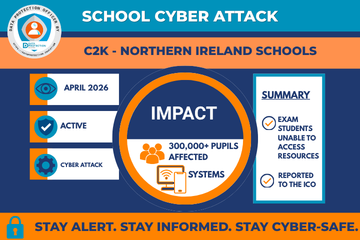
Just at the start of the Easter holidays, an IT system called C2K was the target of a cyber attack. The attack disrupted access to digital tools used by schools across Northern Ireland at a critical point ahead of the exam season.
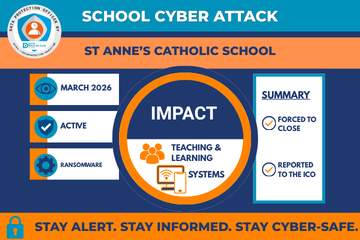
St Anne's Catholic School in Southampton has been forced to close four days after a cyber attack.
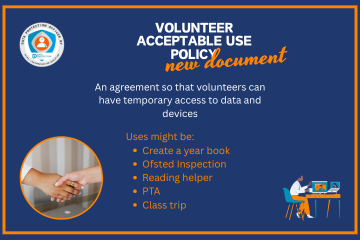
We're pleased to share our Acceptable Use Policy & Agreement for volunteers in response to our customer's requests.
This policy ensures the volunteers in your organisation use school technology responsibly and protect the personal data of pupils and staff.
We typically see a spike in Subject Access Requests (SARs) at the end of term. Understanding how to recognise and response to these requests is vital for staying compliant with Data Protection Law.

Did you know there is an increase in cyber attacks on a long weekend? Long weekends and holidays are 'peak season' for hackers who exploit reduced oversight.
A paper archive is a physical collection of documents, records and contracts stored in their original hard-copy form. This article discusses best practice guidance for keeping records, safe, secure and accessible - an archive is much more than just a 'storage unit'.
Schools are increasingly required to manage sensitive information in ways that balance transparency, fairness, and data protection. One area that frequently creates confusion is the difference between redaction undertaken for a Subject Access Request (SAR) and redaction applied when preparing documentation for a Permanent Exclusion (PEX) Review Panel. The Redaction Guide for PEX Panels has been introduced to address this issue and provide clear, practical guidance for staff.
We know the jargon can be confusing. As can the timelines for responding to the various requests that you receive. Whether it’s an email from a disgruntled parent or a letter from a solicitor, the clock starts ticking the moment it hits your inbox. But before you start pulling files, you must answer one critical question: What exactly are you looking at?

We're already seeing the leavers' hoodies when we're visiting schools and our help desk has received tickets asking about year book administration, so here's some best practice about 'Leaver's Memorabilia'.
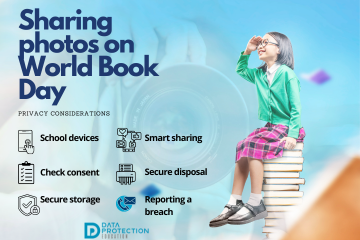
📸✅ It's World Book Day on the 5th March when most schools will be celebrating reading and capturing photos of staff and students in their costumes. Given this is one of many significant photographic events in the calendar, we thought it was a good opportunity to remind everyone of photo and video best practice so there are no data protection slip ups.
©2026 Data Protection Education Ltd.